
Hemorrhoid Treatment in Katy, TX
Relief for hemorrhoids, anal pain and bleeding, from home care to quick office banding, without the embarrassment.
Understanding Hemorrhoids
Hemorrhoids, also called piles, are swollen veins in the lower rectum and around the anus. Everyone has hemorrhoidal tissue. It only becomes a problem when it swells, bleeds, itches or slips out of place. Hemorrhoids are very common, affecting about 1 in 20 Americans and about half of adults over 50, and they are very treatable.
Hemorrhoids are the most common cause of anal symptoms, but not every symptom is caused by hemorrhoids. Bleeding, pain and itching can also come from anal fissures, infections, inflammatory bowel disease, and less often colon or rectal cancer. That is why a proper exam matters before treatment.
Types of hemorrhoids
- Internal hemorrhoids form inside the lower rectum. They are usually painless but can bleed bright red blood or bulge out of the anus (prolapse) during a bowel movement.
- External hemorrhoids form under the skin around the anus. They can itch or ache, and if a blood clot forms inside one (a thrombosed hemorrhoid), it causes a sudden, painful, firm lump.
Hemorrhoid symptoms
- Bright red blood on toilet paper, in the toilet or on the stool
- Itching or irritation around the anus
- A tender lump near the anus, or tissue that bulges out after a bowel movement
- Anal pain or discomfort, especially when sitting
- A feeling that the bowel has not fully emptied
- Mucus leakage or swelling around the anus
What causes hemorrhoids?
- Straining during bowel movements
- Sitting on the toilet for long periods, including scrolling on your phone
- Chronic constipation or chronic diarrhea
- A low-fiber diet
- Pregnancy
- Aging, which weakens the tissue that holds hemorrhoids in place
- Heavy lifting
Other causes of anal pain
Not all anal pain is hemorrhoids. We also diagnose and treat:
- Anal fissures, small tears in the lining of the anus that cause sharp pain during and after bowel movements, often with a little bright red blood
- Anal abscess and fistula, an infection near the anus that causes constant, throbbing pain and swelling, sometimes with fever
- Muscle spasm pain, such as levator ani syndrome and proctalgia fugax, and pelvic floor problems
- Anal itching (pruritus ani), skin conditions and infections
- Inflammation from Crohn’s disease or ulcerative colitis
When to see a gastroenterologist
Never assume rectal bleeding is “just hemorrhoids.” Book a visit if you have any rectal bleeding, symptoms that last more than a week despite home care, or hemorrhoids that keep coming back. See a doctor promptly if you have:
- Bleeding with a change in bowel habits, weight loss or anemia, or bleeding or a lump that does not go away
- Dark red or maroon blood, or black, tarry stools
- Rectal bleeding that starts at age 45 or older, or a family history of colon cancer
- Anal pain that is severe, getting worse, or comes with fever
Go to the emergency room or call 911 for heavy bleeding, bleeding with dizziness or fainting, or severe anal pain with fever, chills or trouble urinating.
Our approach to Hemorrhoids
Diagnosis is the first step in effective hemorrhoid treatment. We review your symptoms and medical history and do a gentle exam, which usually includes a short look inside the anus with a small scope (anoscopy). It takes a few minutes, is done in the exam room and does not need sedation.
If you have bleeding with other warning signs, or you are due for colon cancer screening, we may recommend a colonoscopy to rule out other causes. Colonoscopies are performed by our own physicians at Zazen Surgery Center, in the same building as our clinic.
Home care and prevention
Most hemorrhoids get better with changes that make bowel movements softer and easier:
- More fiber, about 25 to 35 grams a day from food or a fiber supplement such as psyllium, increased slowly
- Plenty of fluids and regular exercise
- Going when you feel the urge, without straining or forcing
- Limiting toilet time to a few minutes, and leaving your phone outside
- Warm sitz baths, 10 to 15 minutes a few times a day, to ease pain and itching
- Short-term creams or suppositories for symptom relief. Hydrocortisone creams should not be used for more than a week without talking to your doctor.
Hemorrhoid banding with little or no pain
Many patients call it painless hemorrhoid banding, because most feel only mild pressure. When internal hemorrhoids keep bleeding or prolapsing despite home care, rubber band ligation is the most effective office treatment for most internal hemorrhoids. It is a non-surgical procedure that takes only a few minutes and does not need sedation or anesthesia.
Your physician places a small rubber band around the base of the hemorrhoid, above the area of the anus that feels pain. This cuts off its blood supply, and the hemorrhoid shrinks and falls off within about a week, usually unnoticed during a bowel movement. Most patients feel only mild pressure or a dull ache for a day or two and go back to work the same day. Some hemorrhoids need more than one session, a few weeks apart.
Tell us before banding if you take blood thinners or aspirin. Do not stop them on your own. We will plan with you and your prescribing doctor, because they raise the risk of bleeding after banding.
Call us right away, or go to the emergency room, if you have heavy bleeding or clots, fever or chills, pain that gets worse instead of better, or trouble urinating in the days or weeks after banding. These are rare but need urgent care.
Other treatments
- Thrombosed external hemorrhoids can be removed in the office under local anesthesia, which works best within about 3 days of the pain starting. After that, they usually settle on their own with home care over a few weeks.
- Anal fissures are treated with fiber, sitz baths and prescription ointments that relax the anal muscle so the tear can heal. Many heal within 6 to 8 weeks. Fissures that do not heal may need Botox injections or a minor surgery.
- Large or severe hemorrhoids, or those that do not respond to banding, may need surgery. We refer you to a trusted colorectal surgeon when that is the best option.
Many patients wait years before mentioning hemorrhoids because they feel embarrassed. Please do not. It is one of the most common things we treat, and most people feel better quickly once they get the right care.

Dr. Vivian Asamoah, MD
Board-Certified Gastroenterologist, Integrative Medicine
Key Facts
What you need to know
Everything you need to know before your appointment.
Who should consider this
Anyone with rectal bleeding, anal pain or itching, or hemorrhoids that keep coming back.
Learn more
What to expect
A private, respectful visit, a quick exam, and treatment that often starts the same day.
Learn more
Recovery and results
Most people return to normal activities the same day after banding.
Learn more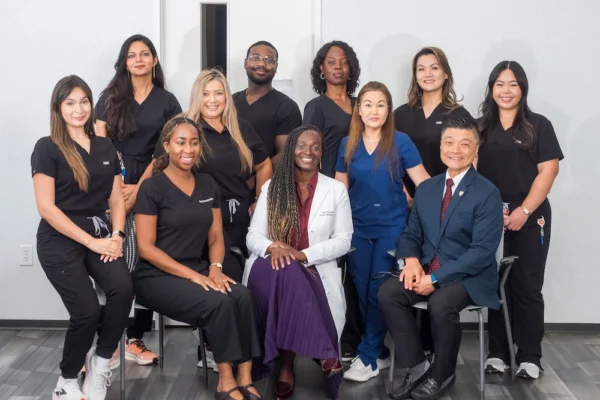
Why our team
Gastroenterologists who treat hemorrhoids and anal pain every day and make sure nothing more serious is missed.
Learn moreWhat Our Patients Say
-
Dr. Asamoah is a wonderful doctor with an excellent bedside manner who cares about what you're going through and leaves no stone unturned I highly recommend.
-
From the moment of entering the Surgical Center, I felt like I was an individual and my needs were of concern. The actual procedure experience was great. Dr. Asamoah has a way of making you feel at ease. She's gathered a staff of people who do the same thing. Highly recommend.
-
I was very impressed with both doctors' expression of authentic interest in and concern with my health concerns. A rare experience.
-
Highly recommend. The office staff and Dr. Asamoah were helpful, friendly and very accommodating! We left feeling like we have answers and are hopeful.
-
First time visit. Impressed by the clean and nice environment. Friendly staff. Doctor takes her time to hear you and answer any questions you have. Great experience.
-
Wow!!! Absolutely amazed by the facility and doctor! Dr. Vivian Asamoah is extremely educational, professional, and so sweet! I went in feeling extremely anxious because of my health issues, and she put me at ease by explaining every detail! Xiomara, her MA, was so helpful and thorough. Honestly, she is by far one of the best doctors I've seen. God bless this office and everyone in it! I most definitely recommend her!
-
I went in to check on issues I was having with my colon. I was in a panic and was not feeling my best. Dr. Asamoah was kind and very understanding, with great patient-relationship skills. She is genuine and truly professional. Her staff is great and wonderful. I will recommend my family and friends.
-
Had a great experience. The doctors are very understanding and comforting. They listen to all of your needs. Loved their music. Very relaxing.
Individual results vary.
Ready to talk with a specialist about hemorrhoid treatment?
Schedule a consultation with our team. We are here to help you find lasting relief.
Expert GI. Whole-person care. All under one roof.Common questions about Hemorrhoids
Most hemorrhoids improve with more fiber, more fluids, less straining and warm sitz baths. Internal hemorrhoids that keep bleeding or bulging out are often best treated with rubber band ligation, a quick office procedure. Surgery is only needed for a small number of people.
Most people feel little or no pain. The band is placed above the area of the anus that has pain nerves, so patients usually feel mild pressure or a dull ache for a day or two. No sedation is needed.
Most people go back to work and normal activities the same day. The banded hemorrhoid falls off within about a week, sometimes with a little bleeding. Avoid heavy lifting and straining for a few days.
Yes. Mild hemorrhoids often settle within a week or two with home care and softer stools. Hemorrhoids that keep bleeding, bulge out or come back often usually need treatment from a doctor.
No. Bleeding can also come from anal fissures, inflammatory bowel disease, polyps or, less often, colon or rectal cancer. Any rectal bleeding should be checked by a doctor, especially if you are 45 or older or have other symptoms.
Internal hemorrhoids form inside the rectum and usually cause painless bleeding or bulging. External hemorrhoids form under the skin around the anus and can itch, ache or become very painful if a blood clot forms inside them.
Sharp, cutting pain during and after a bowel movement is often caused by an anal fissure, a small tear in the lining of the anus. Many fissures heal with fiber, sitz baths and a prescription ointment. Those that do not may need Botox or a minor procedure.
Eat plenty of fiber, drink enough fluids, stay active, go when you feel the urge, and avoid straining or sitting on the toilet for long periods. Treating ongoing constipation or diarrhea also helps.
Yes. Pressure from the growing baby and constipation make hemorrhoids common in pregnancy. Most improve after delivery. Fiber, fluids and sitz baths are safe, but check with your doctor before using any cream or medicine.
Yes. Gastroenterologists diagnose and treat hemorrhoids and other anal problems, including office banding. They can also find and treat the constipation or diarrhea behind them, and check that bleeding is not caused by another condition.
Houston Gastro Institute treats hemorrhoids, anal fissures and anal pain at our clinic on Kingsland Boulevard in Katy, TX. Patients come to us from across west Houston, including Cinco Ranch, Fulshear, Richmond, Brookshire, Sugar Land and Cypress. Colonoscopies are performed at Zazen Surgery Center in the same building.